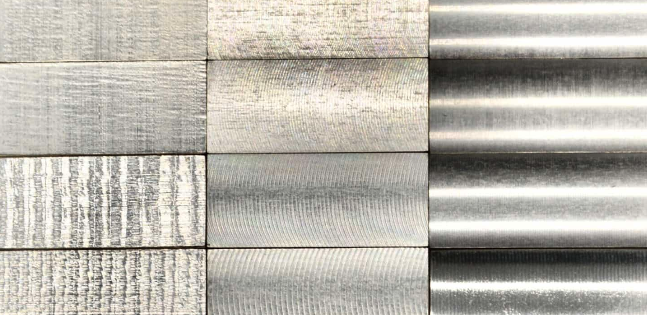
What is surface roughness? Surface roughness is a measure of the average texture on the surface of a CNC machined part. There are different parameters used to define surface roughness. The most common one is Ra (average roughness), which comes from the difference between surface height and depth. The surface roughness of Ra is measured by a microscope, usually in micrometers (x 10 ^ ⁶ m). Please note that in this case, surface roughness is different from surface smoothness. The surface smoothness of machined parts can be improved through various precision machining methods, such as anodizing, sandblasting, and electroplating. The surface roughness here refers to the surface texture of the processed part. How to achieve different surface roughness options? The surface roughness of processed parts is usually not random. Instead, take measures to ensure that a specific roughness is achieved. This means that the surface roughness value is pre planned. However, usually no value is specified. In the manufacturing industry, some specific Ra values are considered industry standards specified in ISO 4287. These are values that may be specified during CNC machining. They range from 25 microns to 0.025 microns and are suitable for various manufacturing and post-processing operations. We offer four levels of surface roughness, which are also commonly specified values in CNC machining applications: 3.2 μ m Ra, 1.6 μ m Ra, 0.8 μ m Ra, and 0.4 μ m Ra. Different applications require different roughness values. Lower surface roughness should only be specified when necessary. This is because the lower the Ra value, the more processing workload/operation and quality control are required. They will significantly increase processing costs and time. When a specific surface roughness value is required, post-processing operations are usually not performed. This is because these operations cannot be precisely controlled and may affect the dimensional tolerances of the parts. The comparison of surface roughness between CNC milling and turning can significantly affect the functionality, performance, and durability of parts in certain applications. It will affect the friction coefficient, noise level, wear, heat, and adhesion of the parts in use. The importance of these factors varies depending on the application, therefore, although the surface roughness of the part may not be significant in some applications, it is crucial in many other applications. These applications include high tension, stress, and vibration scenarios, mating and moving components, rapidly rotating parts, and medical implants. As mentioned earlier, different applications require different levels of surface roughness. 3.2 μ m Ra is a standard commercial machine surface treatment. It is suitable for most consumer parts and smooth enough, but it contains visible cutting marks. Unless otherwise specified, this is the default surface roughness for the application. 3.2 μ m Ra is the recommended maximum surface roughness for parts subjected to stress, load, and vibration as machining cutting marks. When the load is light and the movement is slow, it can also be used to match the moving surface. It is made by high-speed, fine feed and light cutting processing. Normally, when using this option, there are only slight visible cutting marks for a 1.6 μ m Ra. It is recommended to use this Ra rating for tight fitting and load-bearing parts, and it is sufficient for slow movement and lightweight load-bearing surfaces. However, it is not suitable for rapidly rotating parts and parts subjected to strong vibrations. This surface roughness is generated under controlled conditions through high-speed, fine feed, and light cutting. Price: For standard aluminum alloys (such as 3.1645), this option will increase the production price by approximately 2.5%. This may increase with the complexity of the parts. The surface finish of 0.8 μ m Ra is considered to be of high grade and requires very strict control for production, resulting in higher costs. This is necessary for parts exposed to stress concentration. When the motion is accidental and the load is light, it can be used for bearings. Price: For standard aluminum alloys (such as 3.1645), this option will increase the production price by approximately 5%. This may increase with the complexity of the parts. 0.4 μ m Ra is the finest (in technical terms, "least rough") and highest quality surface roughness provided. It is suitable for parts that can withstand high tension or stress. It is also required for fast rotating components such as bearings and shafts. This surface roughness requires maximum effort during the manufacturing process and should only be specified when smoothness is crucial. Price: For standard aluminum alloys (such as 3.1645), this option will increase production prices by approximately 11-15%. This may increase with the complexity of the parts.